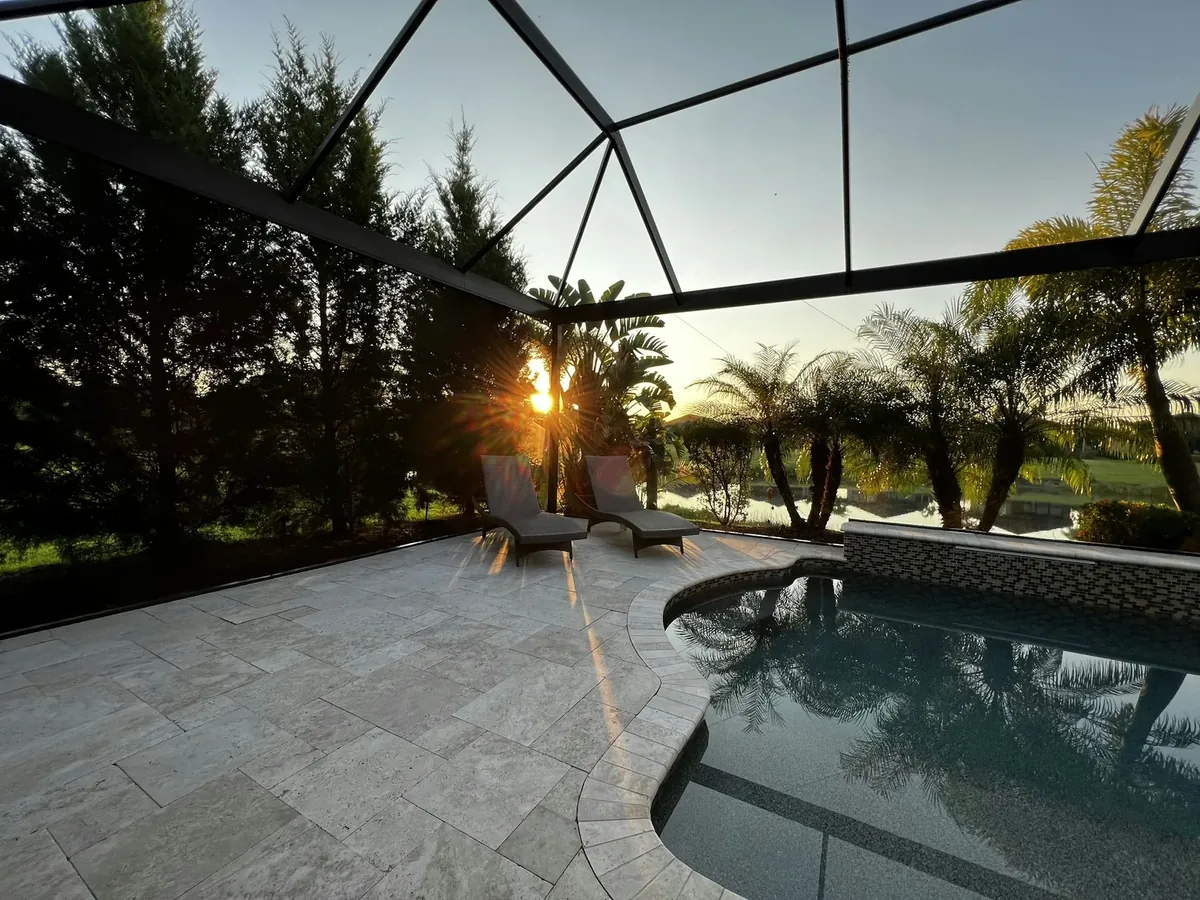
Most in-ground pools here come with a concrete or paver apron from the pool builder. Raised decks enter the picture when the yard slopes, when an above-ground or partly raised pool needs a walkway, or when the family wants a deck that steps from the back door down to the water. The material choice for that deck comes down to four questions: how hot does it get, how slick is it wet, how does it handle pool water, and how much care will it need.
Pool Deck Materials Compared for Florida Homes
| Surface | Barefoot heat | Wet grip | Pool-water tolerance | Upkeep |
|---|---|---|---|---|
| Capped composite | Light colors fair; dark colors hot | Good with embossed grain | Good; wash off residue | Wash once or twice a year |
| PVC decking | Often cooler than composite | Good with textured profiles | Very good; no wood content | Wash as needed |
| Pressure-treated pine | Usually the coolest wood option | Fair when clean; slick with algae | Splinters and checks with constant wetting | Clean and seal every one to two years |
| Concrete or textured coating | Varies by finish and color | Good when textured | Very good | Clean and recoat over time |
| Pavers or travertine | Light stone stays cooler | Good | Very good | Joint sand and sealing |
We build raised decks in wood, composite and PVC. Concrete, pavers and stone at ground level are usually installed by pool or hardscape contractors, and many good pool areas combine them, with a paver apron at the water and a composite deck stepping down from the house.
Composite Pool Decks in Florida Sun
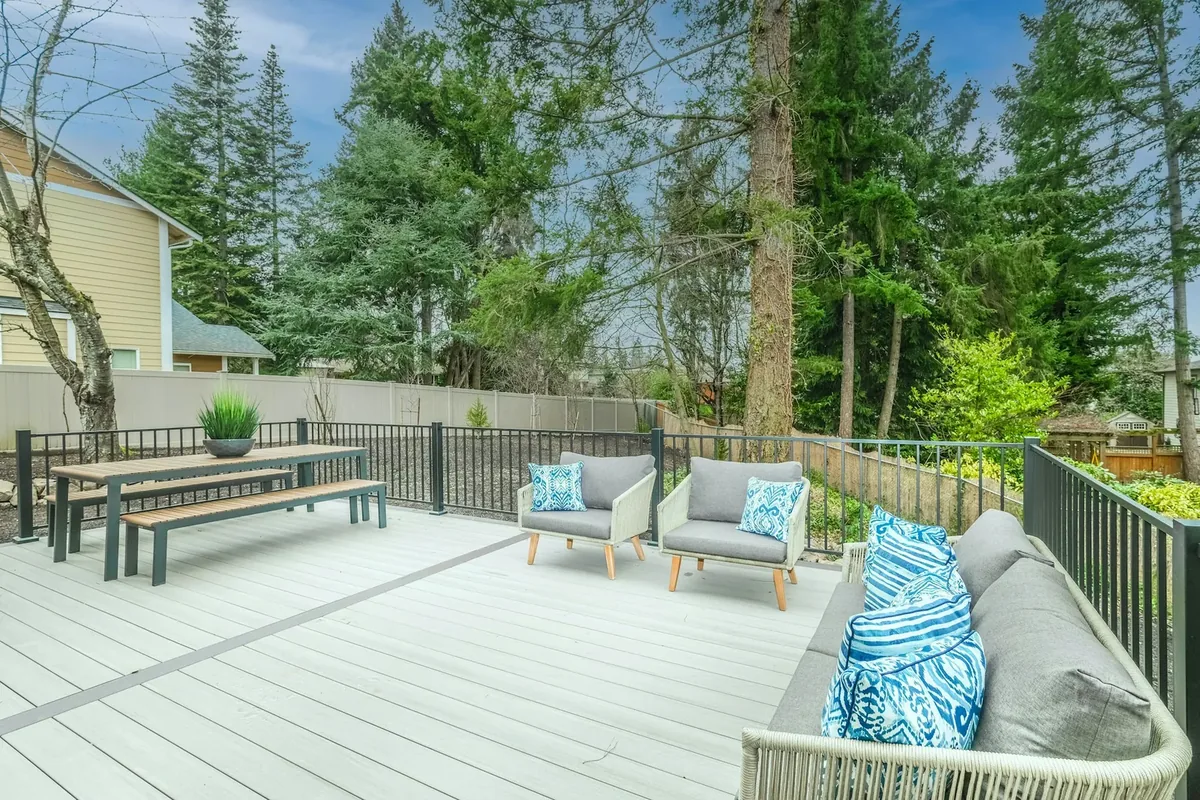
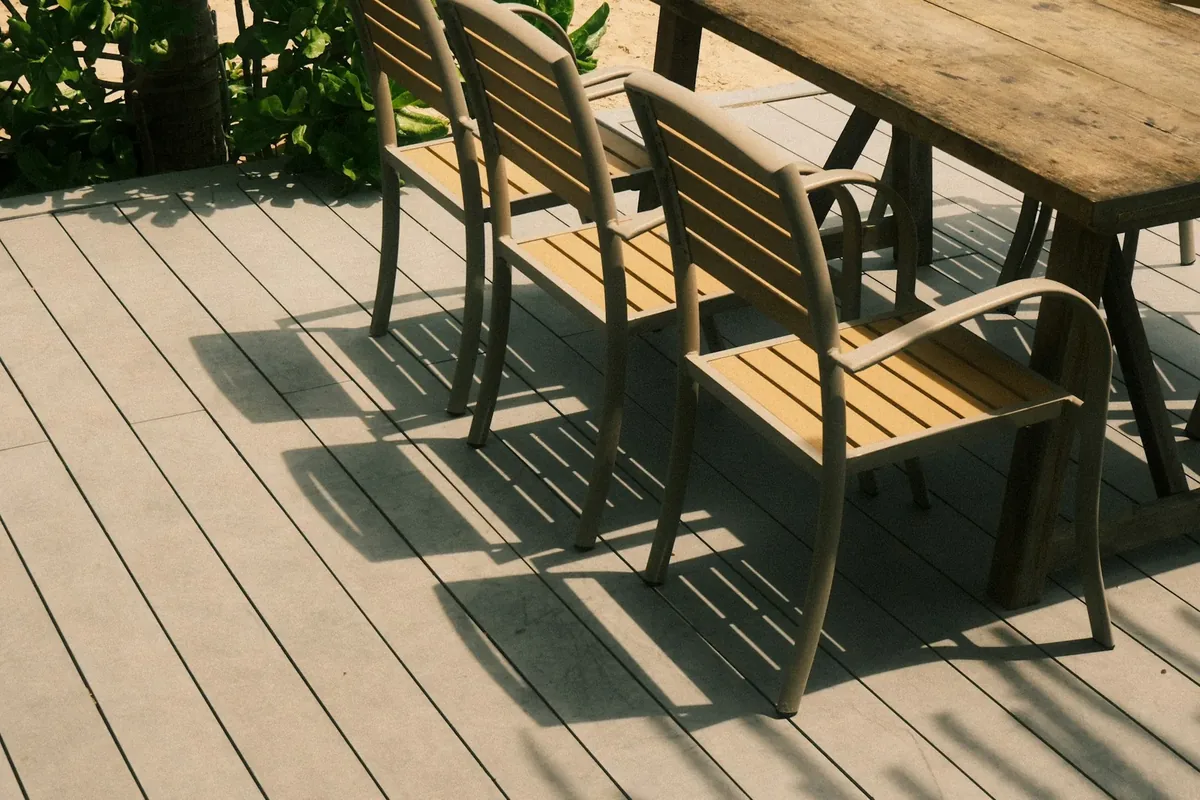
Capped composite is the most popular raised pool deck surface for a reason. It does not splinter, it does not soak up water, and it does not need sealing. Heat is the catch. Dark browns and charcoal grays can get hot enough by midafternoon to make people hop, and some retail testing in Florida has measured boards at 140 degrees or more in direct summer sun.
- Pick the lightest color you can live with. Pale grays and sandy tones stay noticeably cooler.
- Look at heat-reflective lines from the big brands. Several manufacturers now sell boards built to stay cooler.
- Take samples home and set them by the pool in afternoon sun for a few days before ordering.
- Shade the lounging zone with a pergola or umbrella and keep the walking path short.
For a broader look at the two main board types, see composite vs. wood decks in North Florida.
Slip Resistance on Florida Pool Decks
A wet deck with bare feet and kids running is the main safety concern. Smooth or glossy finishes have no place around a pool. Look for boards with a deeply embossed grain or brushed texture, keep algae and mildew off with regular washing, and avoid putting a step where people come out of the water. Stair treads need the same textured surface as the deck, and wide, shallow stairs are easier on wet feet than steep ones, as long as risers and treads stay within code limits.
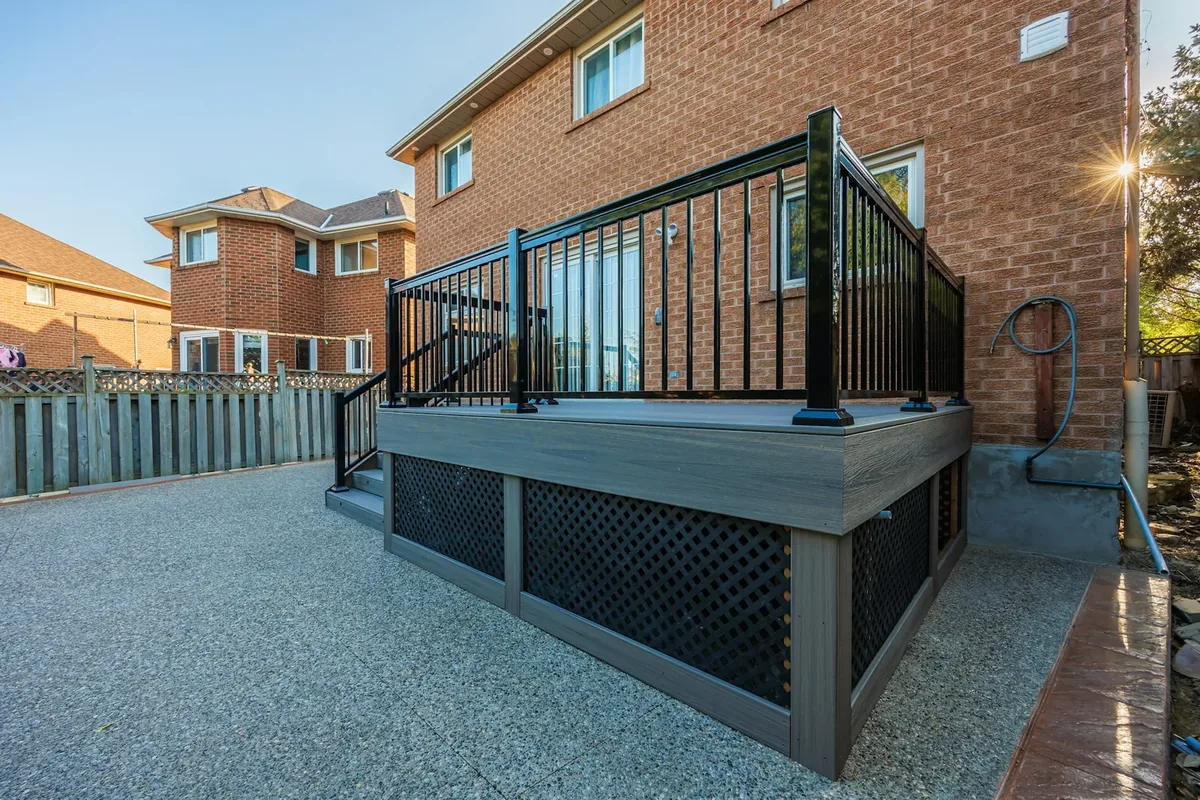
Railings matter too. Any part of a pool deck more than 30 inches above the ground needs a guard under the Florida Building Code, and a deck that wraps a pool may also form part of the required pool barrier. Barrier rules for gates, latch height and climbable openings are their own section of the Florida Residential Code, and we design to them from the start. Options from wood to aluminum and cable are on our deck stairs and railings page.
Stainless Steel Hardware for Pool Decks
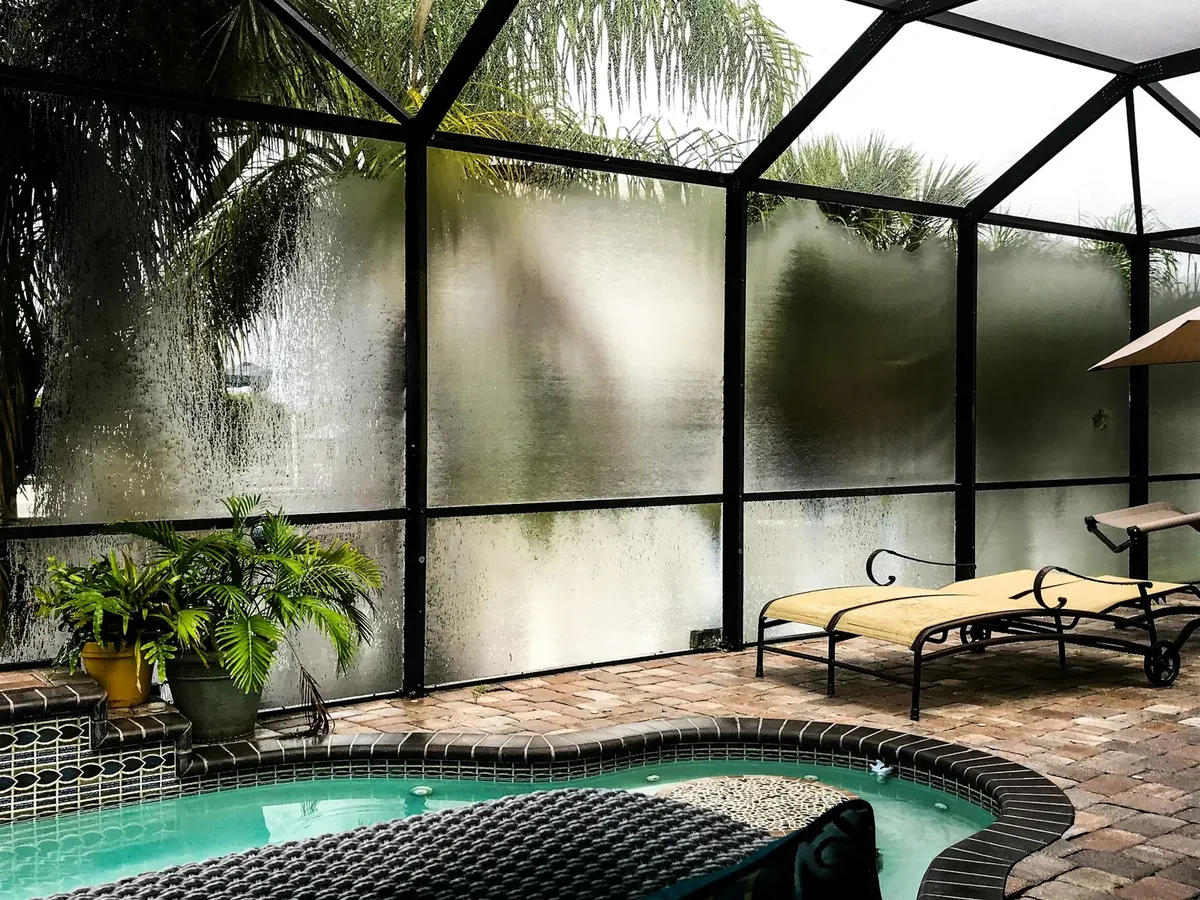
Chlorine and salt both attack metal. A deck that looks fine on top can have hangers and screws corroding underneath, especially within splash range of the water. Composite makers specify stainless steel fasteners near salt water, and TimberTech recommends 316-grade stainless for those installs. Around pools, we use stainless steel hardware near the water instead of the hot-dip galvanized connectors we use elsewhere.
| Hardware | Away from the pool | Near the pool |
|---|---|---|
| Joist hangers and ties | Hot-dip galvanized | Stainless steel |
| Deck screws or hidden clips | Coated or galvanized per board maker | Stainless steel |
| Ledger bolts | Hot-dip galvanized | Stainless steel |
| Railing fasteners | Per rail system | Stainless steel |
If you have a saltwater system, this matters even more. Salt pools put chloride into every splash, and 316 stainless resists that better than lower grades.
Pressure-Treated Wood Pool Decks
Wood can work around a pool, and it costs the least to build. It also asks the most of you. Constant wet-dry cycling speeds up checking and splintering, and a pool deck in full sun needs sealing at the short end of the one-to-two-year cycle. If you choose wood, plan to reseal on schedule, keep boards clean so algae does not build a slick film, and accept that a few boards may need replacing over time. Our deck cleaning and sealing service is built for that upkeep.
Keeping a pool deck clean
Whatever the surface, a pool deck stays safer and lasts longer with a simple routine. Rinse off sunscreen, pool chemicals and leaves weekly in swim season. Use a cleaner made for your board type a couple of times a year, with a soft brush instead of a stiff wire bristle. Keep pressure washers on a low setting and well back from composite boards, and avoid harsh chemicals that the board maker does not approve. Clear the gaps between boards so water drains instead of sitting under pool toys and lounge chairs.
Pool Deck Layout Ideas for Sloped Florida Yards
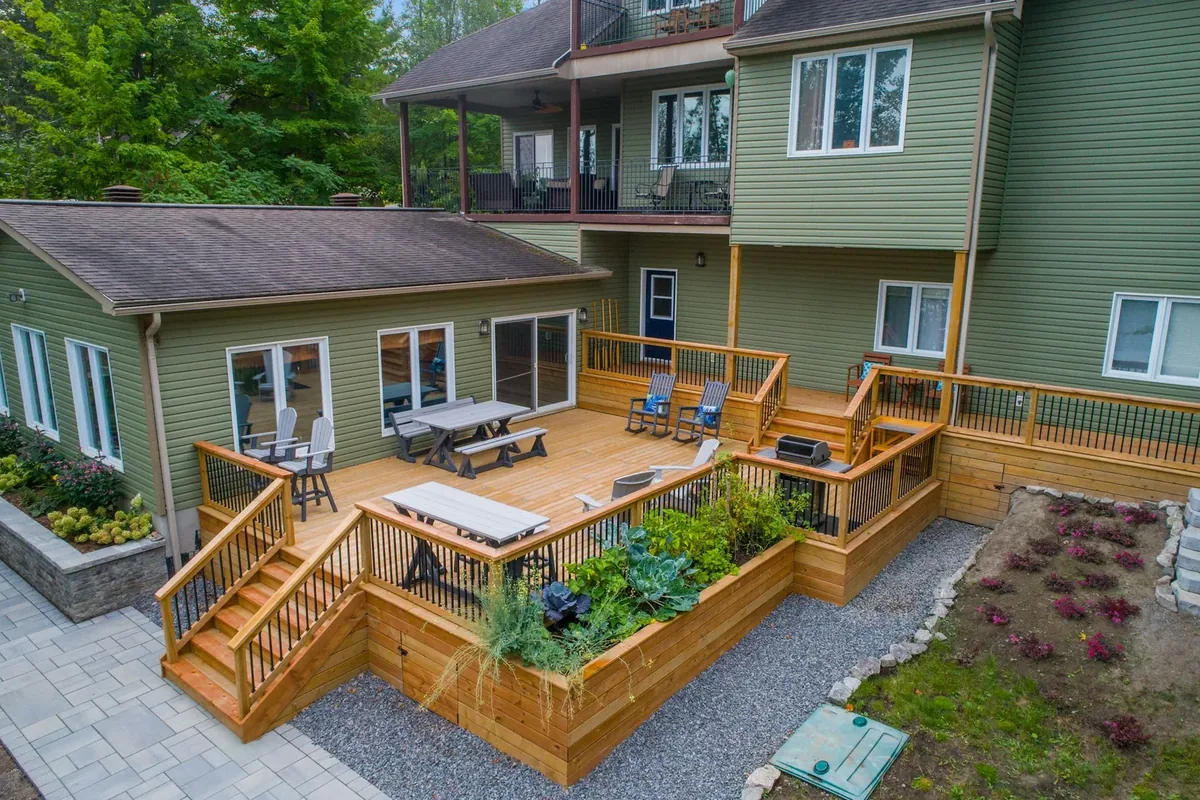
Plenty of lots around Alachua drop off behind the house, which leaves the back door several feet above the pool or the lawn. A multi-level deck solves that with a few broad steps instead of one tall staircase. A common layout puts a dining level at the back door, a second level a few steps down for lounging, and wide stairs that land on the pool apron. Breaking the height into levels can sometimes keep a level under the 30-inch guard threshold, which opens up the view.
- Put the grill on the upper level, away from wet feet and splash.
- Keep the main path from the door to the water straight and clear.
- Use the space under a raised level for pool equipment or storage, screened with skirting that still lets air through.
- Plan lighting on stairs and level changes for night swims.
Pool Deck Framing and Drainage
Pool areas are wet from above and often from below, since splash-out soaks the ground under a raised deck. That makes framing choices more important:
- Ground-contact rated lumber for posts, beams and joists.
- Concrete footings that keep posts off damp soil.
- Butyl joist tape over every joist and beam top, so splash water can't sit in the screw holes.
- Board gaps that stay open so water drains through instead of pooling.
- Enough height or open sides for air to move under the deck.
Pool Deck Costs in North Central Florida
Pool and multi-level decks start around $12,000 and larger builds run $25,000 or more. Height, number of levels, railing length and the board you choose drive most of the spread. The deck cost guide shows how pool decks compare to other projects, and the deck cost breakdown walks through the math.
Pool Enclosures and Screened Pool Decks
Many Florida pools sit under a screen cage. If you want one over a new deck or want to tie a deck into an existing cage, the enclosure needs wind-load engineering and a permit, and the deck framing has to carry the cage posts where they land. That is a conversation for the design stage. Our screen rooms and lanais page covers enclosed options.
Golf-course lots in Turkey Creek and newer yards in Savannah Station call for different pool decks, and the yard decides as much as the material does. See our pool and multi-level decks page, see how a project runs on our Alachua deck builders homepage, and call or text us to plan yours.