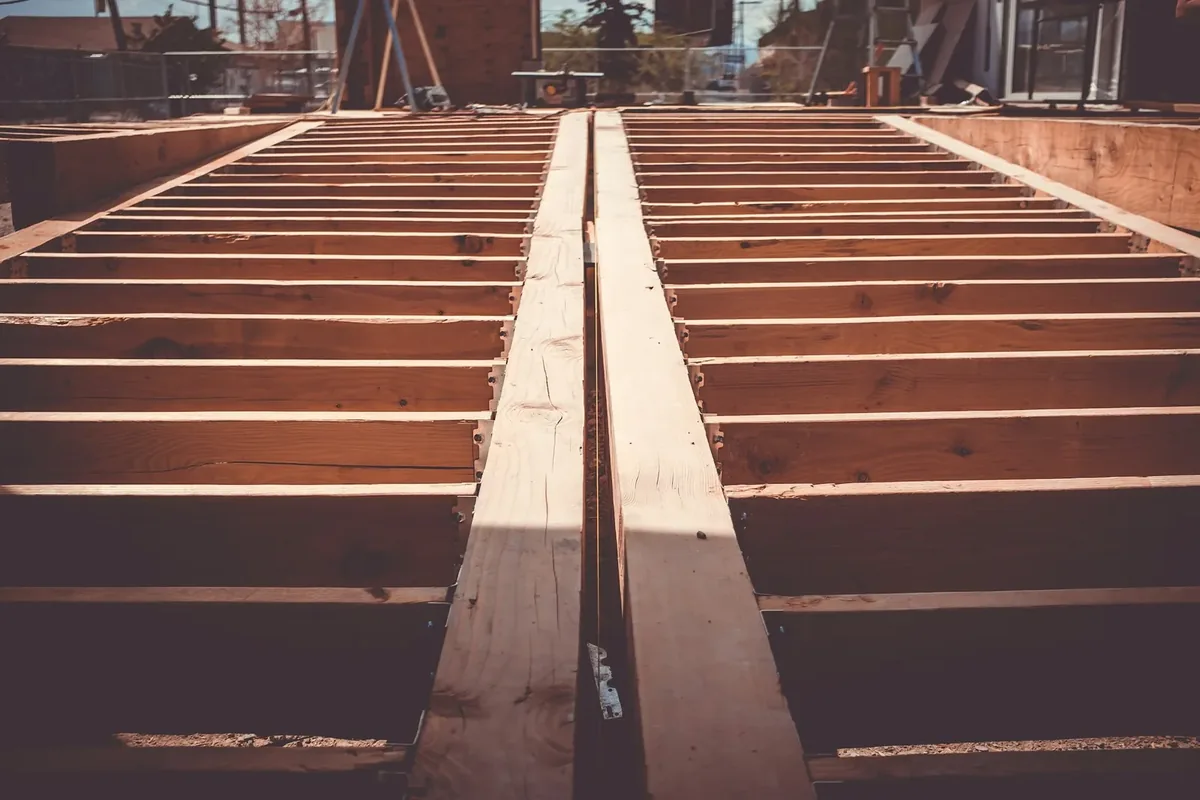
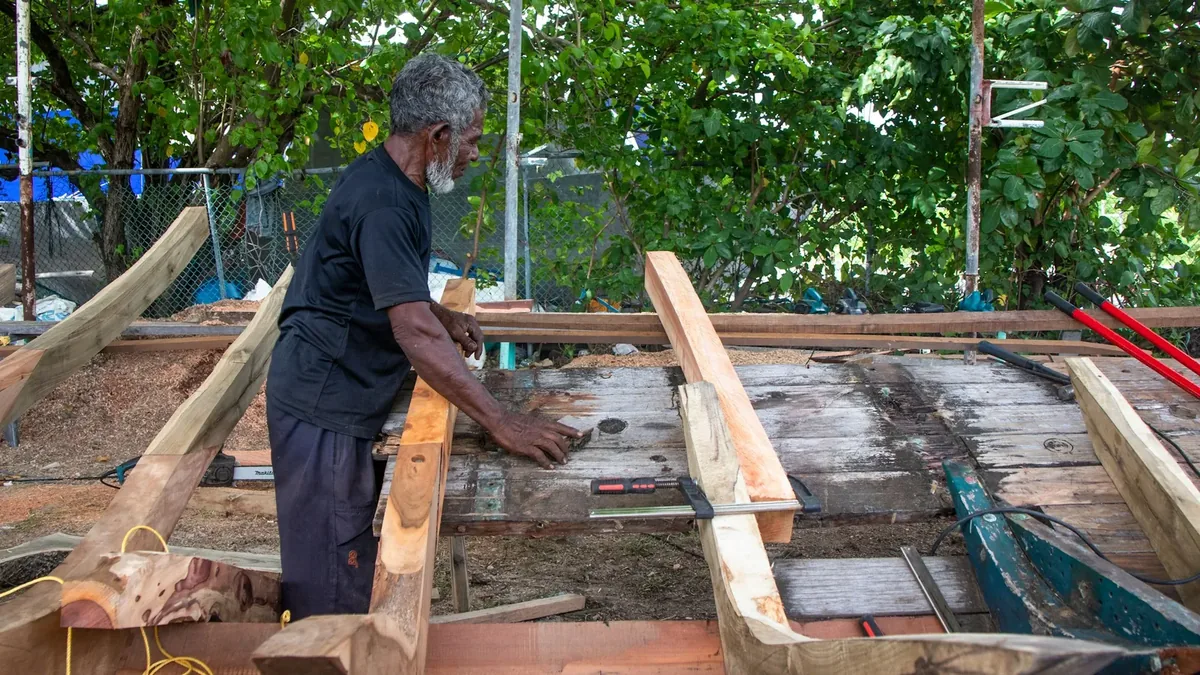
Most homeowners only look at a deck from the top, and the top can look fine for years after the frame starts to go. Moisture, termites and rust do their work underneath, where boards trap shade and humidity. A twenty-minute look under the deck once a year, ideally before hurricane season, catches most problems while they are still repairs instead of replacements.
Signs Your Deck Framing Needs Repair: Start on Top
1. Soft spots that line up
One spongy board usually means one bad board. A row of soft spots running in a straight line across the deck usually means the joist under them is rotting. Step on each soft area and look for a pattern before you replace boards.
2. A floor that bounces or sags
Some flex is normal on a long span. A deck that suddenly feels bouncier than it used to, or has a visible dip in the middle, can point to undersized joists, a cracked beam, or a joist that has pulled out of its hanger.
3. Railing posts that move
Push on each railing post at the top. If it shifts more than a little, the post may be loose at its bolts or the rim joist it attaches to may be soft. A guard that gives way is a safety problem, so this one goes to the top of the list.
4. Stairs that rock or tilt
Stair stringers sit close to the ground and soak up splash from every storm. Look for a stringer that has sunk, split, or separated from the deck rim. Rotten stair treads are cheap to replace, and rotten stringers mean the whole run needs rebuilding.
Deck Framing Problems Seen From Underneath
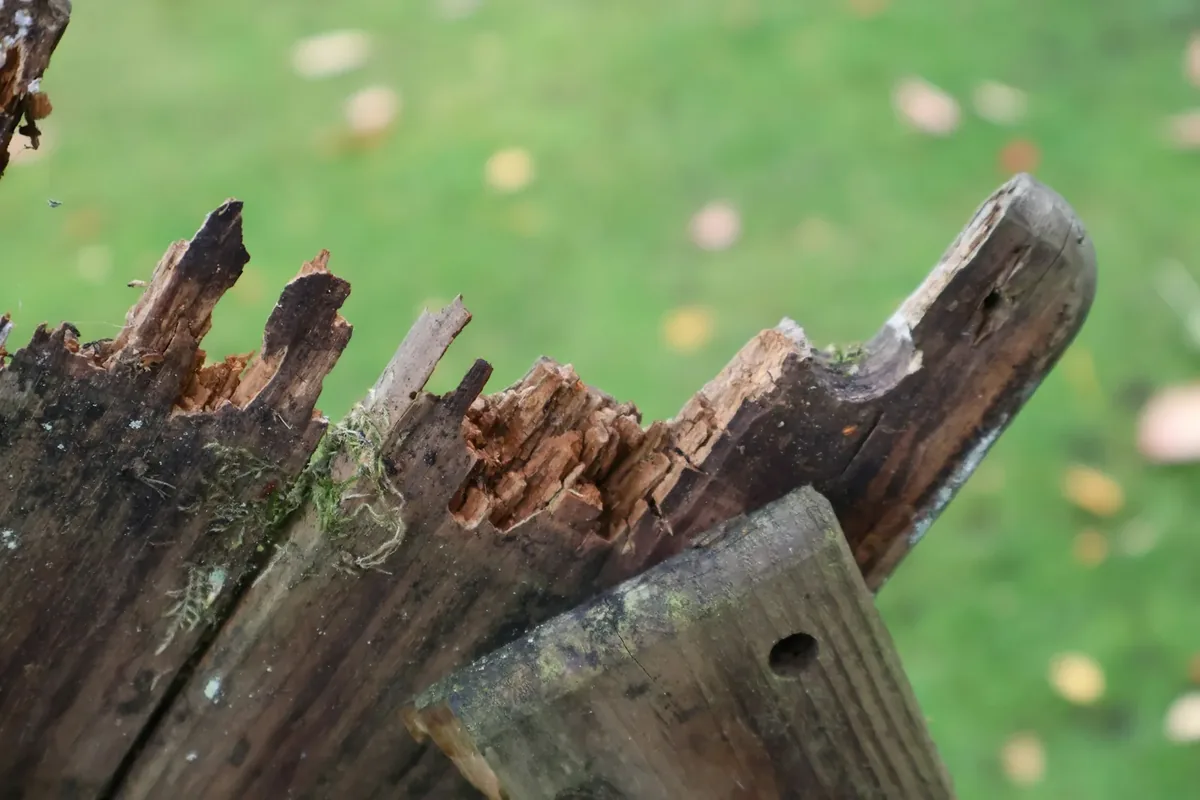
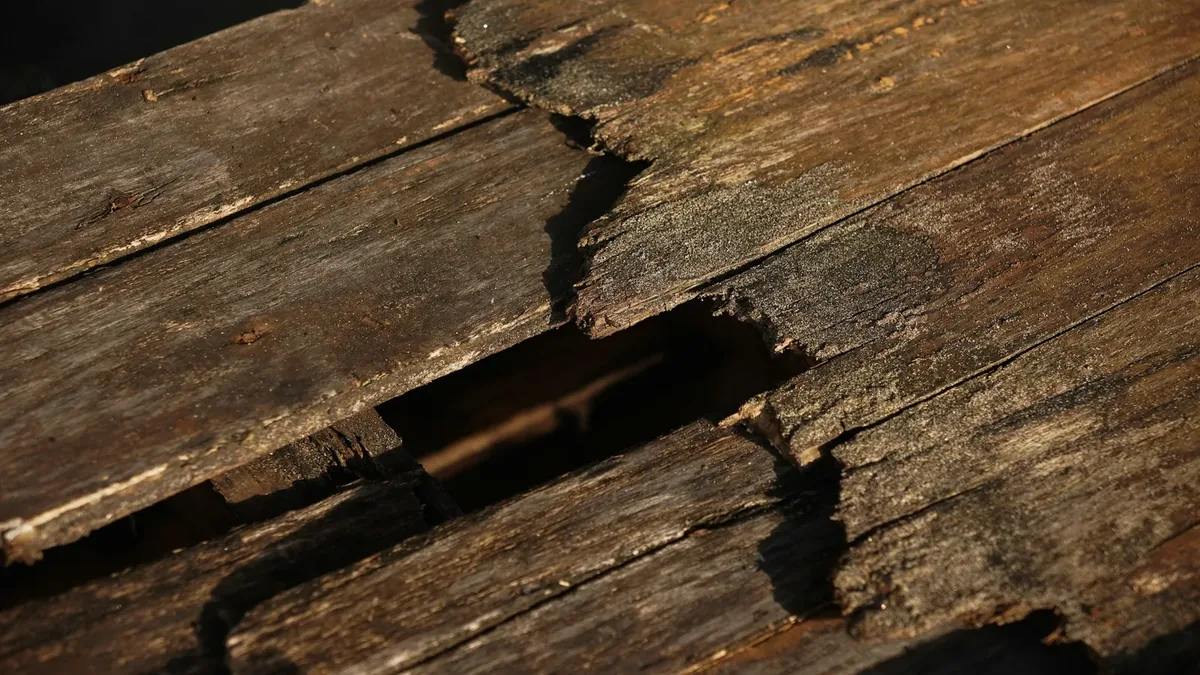
Grab a flashlight and a flat screwdriver. Press the tip into the wood at posts, beam ends and joist ends. Sound treated pine resists. Rotted wood lets the tip sink in with little effort and often comes out in soft, stringy pieces.
5. Posts sitting in the soil
Older decks often have posts set straight into the ground or in concrete that holds water against the wood. Look for dark, soft wood at the base, or a post that has settled so the beam above is out of level. Posts held off the soil on concrete footings last far longer in our sandy, damp ground.
6. Rust stains and corroded hangers
Orange streaks running down from joist hangers, bolts or screws mean the metal is corroding. Treated lumber is hard on plain steel, and connectors that were not hot-dip galvanized can rust through. Near a pool, chlorine speeds that up, which is why stainless steel is the safer choice there.
7. A gap between the deck and the house
Look where the deck meets the wall. A widening gap, a ledger board that has pulled away, or dark streaks on the siding below it all suggest water is getting behind the ledger. Many serious deck collapses start at a failed ledger, so treat any movement here as urgent. Check for flashing over the ledger and for bolts, since nails alone are not an acceptable ledger attachment under current code.
8. Mushrooms, fungus or a musty smell
Shelf fungus on a joist or beam is a sure sign of rot inside the wood. A musty smell under a low deck can point the same way, especially in shaded yards where the ground never fully dries.
9. Termite signs
Subterranean termites build mud tubes up foundation walls, piers and posts. Wood that sounds hollow when tapped, or layers that peel away to reveal tunnels, needs a pest professional as well as a carpenter. Composite boards do not feed termites, but the treated framing below can still be attacked where the treatment has worn or cut ends were left bare.
10. Water that stays under the deck
Standing water or a low spot that stays muddy days after a storm keeps the framing damp. Grading, gravel or a small drain can fix the cause, and the wood around it should be checked closely.
Deck Framing Checklist for Alachua Homeowners
Once a year, ideally in late spring, walk through this list. It takes less than half an hour on most decks.
- Walk the whole surface and mark any soft or springy spots with tape.
- Push hard on every railing post and stair handrail.
- Look at the ledger from below for gaps, missing bolts and stains on the wall.
- Probe the base of each post and the ends of beams with a screwdriver.
- Check every joist hanger and tie for rust, missing nails or pulled-out joists.
- Look for mud tubes on posts, piers and the house foundation.
- Check stair stringers where they meet the ground and the deck rim.
- Clear leaves and pine straw from between boards and under the deck.
Photograph anything that looks off. Pictures taken a year apart are the easiest way to see whether a gap or sag is growing.
Repairs that hold up in our climate
A repair is only as good as the details around it. When we replace framing, new joists and posts are ground-contact rated, posts go onto concrete footings instead of into the dirt, hangers are hot-dip galvanized or stainless near a pool, and butyl tape goes on the joist tops before boards return. Cut ends of treated lumber get a brush-on preservative, since cutting exposes wood the factory treatment may not have reached. Those steps add little to the cost of a repair and decide whether it lasts.
Deck Framing Repair Costs in Alachua County
Repairs range from a few hundred dollars to several thousand. Here is how common fixes usually fall.
| Repair | Typical range | Notes |
|---|---|---|
| A few boards, stair treads or a railing section | A few hundred dollars | Matching old boards can be the hard part |
| Railing posts re-bolted or replaced | A few hundred to low thousands | Depends on post count and rim condition |
| Sistering or replacing several joists | Low to mid thousands | Boards come up over the repair area |
| New posts, footings or beam | Mid thousands | Deck may need temporary shoring |
| Ledger removal, flashing and re-bolting | Mid thousands to several thousand | Often combined with siding repair |
| Full tear-out and rebuild | New-deck price plus $1,000 to $3,000 removal | When framing problems are widespread |
Deck Repair vs. Replacement: When Patching Stops Making Sense
There is no single cutoff, but a few patterns point toward replacing instead of patching:
- Rot shows up in many joists across the deck, not in one corner.
- The ledger and several posts both need work.
- Footings were never poured, so every post is in the dirt.
- The deck was built too low, too tight to the ground, or with untreated lumber, so the same problems will return.
- You want a different size, height or board anyway.
We write down what we find on a framing inspection and price both paths when the answer is close. Our deck repair and deck replacement pages describe each job, and the deck framing inspections page covers what we check, free with any estimate.
Deck Framing Checks Before Hurricane Season
Hurricane season runs June 1 through November 30. Late spring is a smart time for a once-over: tighten railing bolts, look for loose hangers and lateral connectors, clear debris from between boards so water drains, and move planters off any soft spots. If you are planning to add a screen room or roof, have the framing checked first, because a structure built for foot traffic is not automatically ready for roof loads. Our screened porch cost guide explains why.
Deck Framing on Older Alachua Homes
Established neighborhoods like Briarwood and the blocks around downtown Alachua have decks of every age and build quality. Some were framed with modern hangers and footings, and some were built before those details were common. Age alone does not tell you much. What is under the boards does.
If anything on this list looks familiar, start with the Alachua deck builders homepage, check repair ranges on the deck cost page, and call or text us to set up a free framing check.